
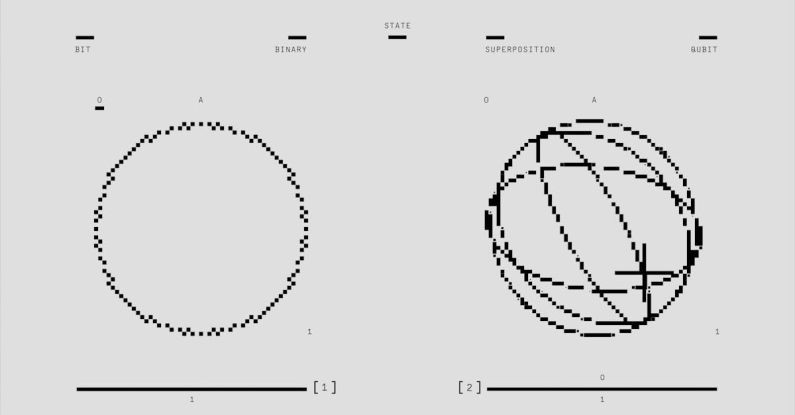
Quantum computing is a cutting-edge technology that has the potential to revolutionize various industries, including data security. As traditional computing systems struggle to keep up with the increasing complexity of encryption methods used to protect sensitive information, quantum computing emerges as a game-changer in the field of data security. By harnessing the principles of quantum mechanics, quantum computers have the ability to perform complex calculations at a speed and scale that are beyond the reach of classical computers. This article explores how quantum computing impacts data security and the implications it has for the future of cybersecurity.
The Power of Quantum Computing in Breaking Encryption
One of the most significant ways in which quantum computing impacts data security is its ability to break traditional encryption methods. Current encryption techniques rely on the difficulty of solving complex mathematical problems to secure data. However, quantum computers can solve these problems exponentially faster than classical computers through a process called quantum factorization. This means that encryption methods that are considered secure by today’s standards may become vulnerable to attacks by quantum computers in the future.
The Impact on Public Key Cryptography
Public key cryptography, which is widely used to secure online communication and transactions, is particularly at risk from quantum computing. The security of public key cryptography is based on the difficulty of factoring large numbers into their prime factors. Quantum computers, with their ability to efficiently factor large numbers, could potentially break the encryption keys used in public key systems, rendering them ineffective in protecting sensitive data. This poses a significant threat to the security of online communications, financial transactions, and other digital interactions that rely on public key cryptography.
The Development of Quantum-Safe Cryptography
As the potential risks posed by quantum computing to traditional encryption methods become apparent, researchers and cybersecurity experts are working on developing quantum-safe cryptography. Quantum-safe cryptography, also known as post-quantum cryptography, aims to create encryption algorithms that are secure against attacks from quantum computers. These new encryption methods are designed to resist the computational power of quantum computers and ensure the confidentiality and integrity of data in the quantum computing era. By investing in the research and development of quantum-safe cryptography, organizations can prepare themselves for the future of data security in a quantum-powered world.
Enhancing Data Security with Quantum Key Distribution
In addition to posing challenges to traditional encryption methods, quantum computing also offers opportunities to enhance data security through quantum key distribution (QKD). QKD is a quantum-based encryption technique that uses the principles of quantum mechanics to secure communication channels between parties. Unlike classical encryption methods, which rely on mathematical algorithms, QKD uses the inherent properties of quantum particles to create secure encryption keys that are immune to eavesdropping. By leveraging the principles of quantum entanglement and superposition, QKD provides a high level of security that is theoretically unbreakable, even by quantum computers.
Securing the Future of Data Security in the Quantum Era
As quantum computing continues to advance, the landscape of data security is likely to undergo significant changes. While the potential threats posed by quantum computing to traditional encryption methods are real, the development of quantum-safe cryptography and quantum key distribution offers promising solutions to enhance data security in the quantum era. By staying informed about the latest developments in quantum computing and cybersecurity, organizations can proactively adapt their security measures to protect their data from emerging threats. Embracing the opportunities presented by quantum computing while mitigating its risks will be essential in securing the future of data security in an increasingly quantum-powered world.